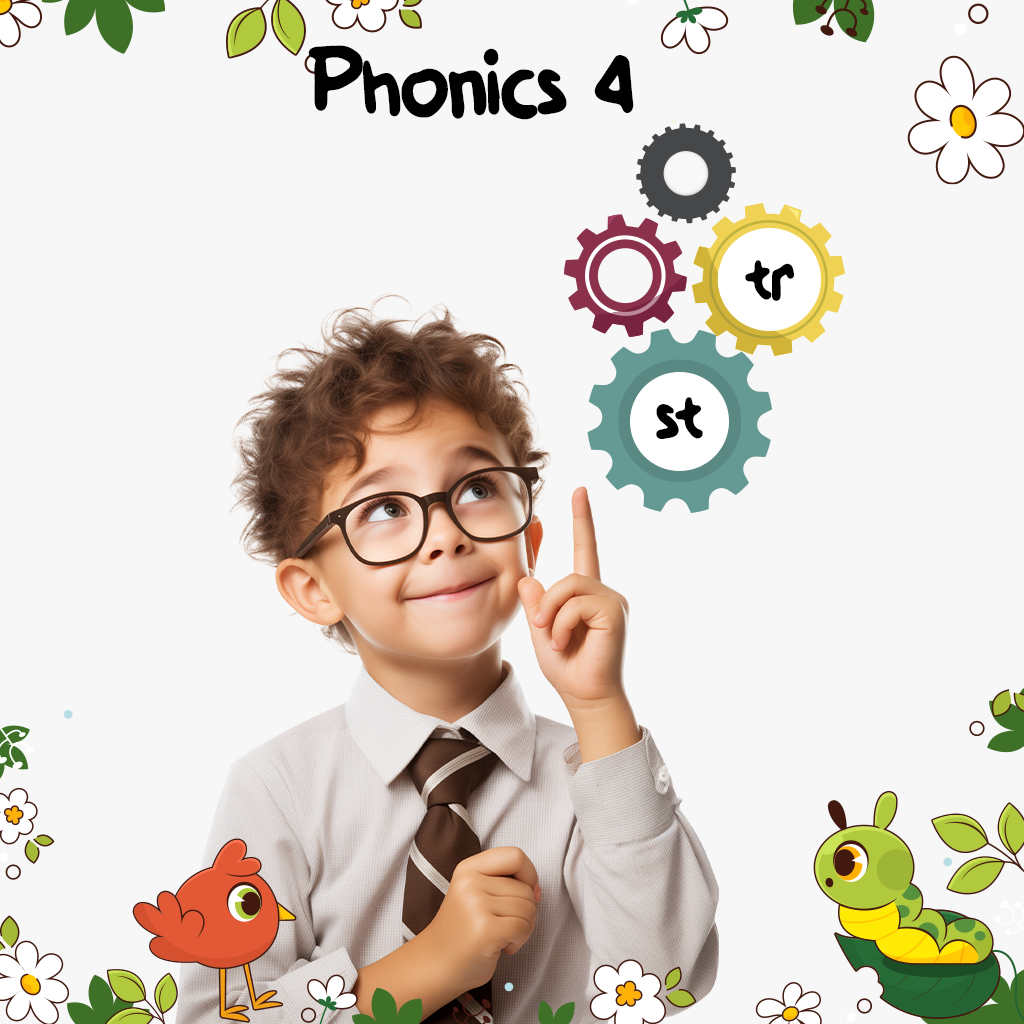
Phase 4 phonics lessons give children the space to strengthen what they already know and push their reading a step further. This stage focuses on joining sounds smoothly, pulling words apart with accuracy, and handling longer sound combinations without worry. It’s a steady point in learning where reading starts to feel real, not just practiced.
Parents looking for phonics classes, phonics tutoring, or structured phonics learning programs choose this Phase 4 course because it helps children blend faster, spell more confidently, and tackle slightly longer words. Activities are simple but intentional. Each one supports sharper listening, clearer sound work, and smoother reading.
Complete the course to earn your certificate, available for viewing and download
Blending shifts from slow, choppy attempts to smooth reading during Phase 4. Children already know the basic sounds, so now they learn how to join them quickly. They start with familiar CVC words just to warm up, then move into CVCC and CCVC patterns that stretch their blending skills a little further. It’s a gentle push, nothing heavy.
Moving from cat to milk, from sun to frog, shows learners that longer words aren’t harder. They’re simply longer sound chains. Once they catch this idea, reading becomes less of a stop-start routine and more of a flow. Daily practice helps them reach that point. Small reading tasks, simple sentences, and short word lists build confidence without overwhelming the child. Their blending becomes faster, cleaner, and noticeably more natural over time.
Segmenting is the partner skill to blending, and Phase 4 gives it equal attention. Children learn how to pull a word apart, hear every sound it’s made of, and match those sounds to letters when writing. This is how spelling starts to make sense. No guessing. No depending on memory alone.
The lesson begins with CVC words, then shifts to CVCC and CCVC. Children learn how to stretch a word like jump or trap, catch each phoneme clearly, and choose letters that match. It feels almost mechanical at first, but it works. Confidence improves fast because segmenting gives them a repeatable method, one they can use any time they write.
Daily activities keep things sharp. Tasks like tapping out sounds, circling phonemes, using letter cards, or writing short lists help learners stay consistent. These moments of practice build accuracy and calm, especially for children who overthink spelling. By the end of Phase 4, segmenting becomes a reliable strategy they carry into more advanced phonics levels.