Phase 5 phonics lessons guide children into wider reading patterns and stronger spelling habits. This part of learning introduces fresh word families, common spelling patterns, and early tricky words that don’t follow the usual sound rules. It’s the stage where reading becomes quicker and far more confident because children recognise patterns instead of sounding out every letter.
Parents searching for phonics classes, phonics tutoring, or phonics learning programs often choose Phase 5 because the structure helps children step into real reading. Each activity supports pattern recognition, new spelling rules, and memory skills that help with words that can’t always be decoded. Children grow steadier with longer words, blends, and irregular spellings.
Complete the course to earn your certificate, available for viewing and download
Phase 5 begins with word families children can recognise at a glance. CVC groups like at, og, it, and et help children spot repeating patterns. Once they catch the pattern, reading becomes quicker. They don’t start from zero each time. They recognise cat, bat, sat, or dog, log, fog because the ending feels familiar.
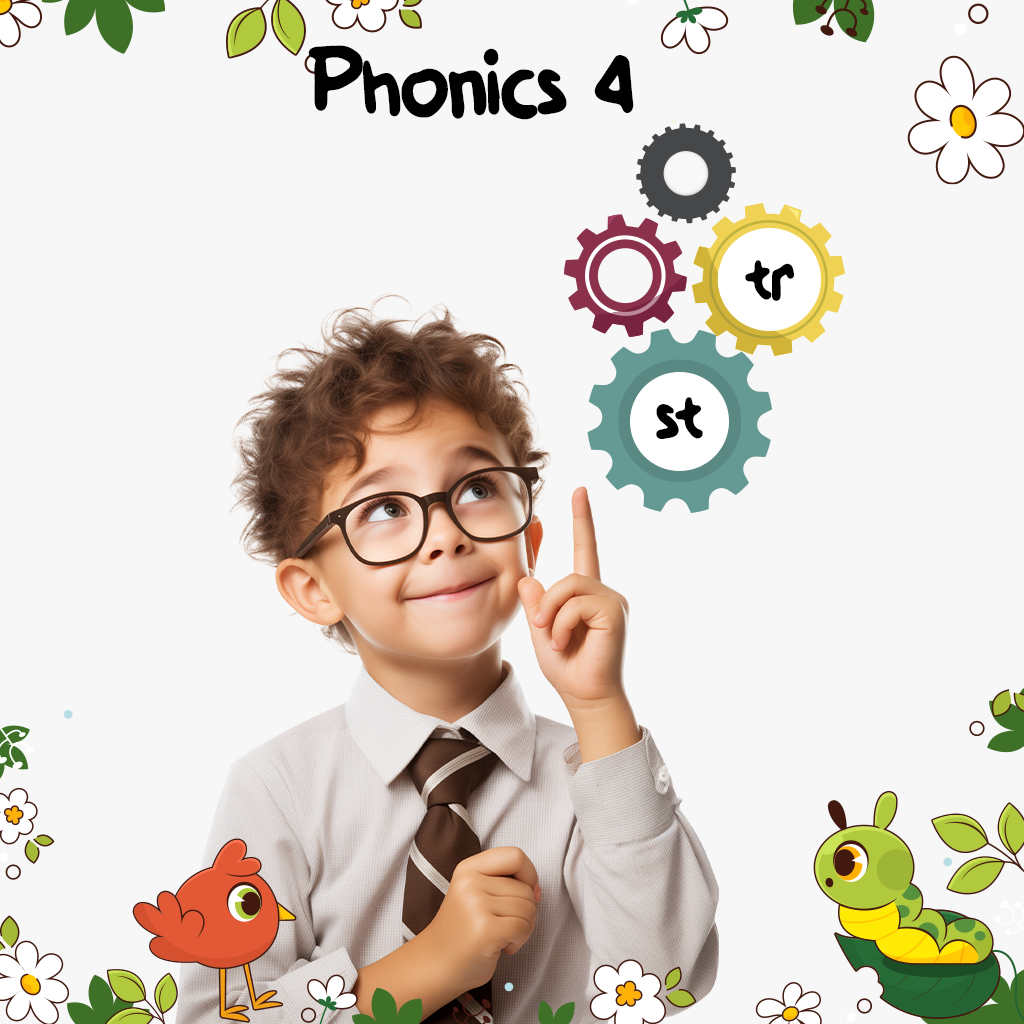
From here, learners expand into CVCC and CCVC words. These slightly longer patterns give children more control over sound chains and spelling structure. Words like past, lamp, clap, and spin teach them how starting blends and ending blends behave in real reading. Starting blends such as bl, tr, sp help with smoother reading at the front of the word. Ending blends like nd, mp, st sharpen spelling because learners must listen for every sound tucked inside the word.
Each activity builds reading confidence by showing children that patterns repeat. Once a pattern feels familiar, decoding speeds up and spelling improves naturally.
Tricky words appear often in early books, and kids meet them long before they feel ready. Some follow patterns. Others refuse to fit any rule at all. Phase 5 gives children a calm way to handle both.
Common spelling rules show up here.
Magic E helps learners recognise how a silent e changes vowel sounds, turning cap into cape or kit into kite.
Soft c and g show how letters sound gentler before e, i, or y.
The double consonant rule helps children understand why some words hold two letters in the middle after a short vowel.
Some words simply cannot be decoded. Children meet them, read them, hear them again, and store them through exposure. Memory strategies like repeated reading, quick flash recognition, and hearing tricky words in full sentences help them stick. It doesn’t need to feel heavy. Once learners understand that some words bend the rules, the pressure fades.
By the end of Phase 5, children read with more rhythm, spell with clearer logic, and approach unfamiliar words with a stronger sense of control.